Bandwagon or Balance: Asian countries’ stances on Hong Kong Protests

Image Source (Judy Gallagher)

Written by James Lo

Anti-government protests have rocked Hong Kong since March 2019 against proposals to introduce an extradition treaty into Hong Kong legislation. Protestors fear that the Hong Kong citizens’ civil liberties are under threat and they will potentially be open to a disproportionate amount of influence from China, especially with previous incidents in the past decade including the arrest of the booksellers and the Umbrella movement. China’s rhetoric is that Hong Kong protests are China’s internal affairs and should not be interfered by any foreign powers.[1] This essay kicks off a two-part piece on attempting to decipher Asian countries’ stances on Hong Kong protests. This first part focuses on three countries who support China’s stance in the matter. I will apply Walt (1985) and Schwelling (1994)’s bandwagon theory to explain why these countries took such a stance. It follows that their dependency on China in economic terms and the benefits they derive from such ties gear them towards a bandwagon stance (instead of the balancing stance which I will look at in the second piece).

I am focusing on three countries – Laos, Cambodia and Myanmar.

Laos

Vilay Lakhamfong, secretary for the Lao People’s Revolutionary Party Central Committee and Minister of Public Security stated that Laos ‘firmly supports the Chinese government’s position in dealing with the Hong Kong issue’[2].

Cambodia

Cambodia’s government chief spokesperson Phay Siphan said that ‘Cambodia supports the one-China policy and regards the Hong Kong issue as China’s internal affairs’[3]. Siphan also ‘slammed certain western countries, saying they should not interfere in China’s internal affairs under the pretext of democracy and human rights’[4].

Myanmar

Myanmar Union Minister for International Cooperation U Kyaw Tin said that ‘Myanmar strongly supports the one-China policy and “one country, two systems” principle’[5].

What the theory says

Walt first proposed the idea of bandwagoning – weak countries can opt to ally with the source of the existential threat as a form of ‘appeasement’[6]. In order to guarantee its own survival, states can choose to ally itself with the source of existential threat (bandwagoning) or to form an alliance with other weak states to balance against the source of threat (balancing). The smaller states will opt to side with the stronger country in hopes to prevent any possible encroachments on its interests in the future. The weaker the state, the more likely it is to bandwagon because their lacking in capabilities mean that they cannot defend themselves against a possible aggressor. They hope to build up good will with the country in hopes of self-preservation. In this case, the strength of the country is determined by the aggregate power – the ‘population, military or industrial capacity’[7] of the country.

Schweller’s criticism of Walt’s balance of theory will help better define Laos, Cambodia and Myanmar’s positions. Schweller argued that Walt’s version of bandwagoning was too focused on cases that involved a significant external threat. Instead, he argued that countries can choose to bandwagon due to the ‘opportunities for gain[8]. Instead of weaker states being ‘threatened or cajoled’[9] to side with the stronger state, they side with the stronger state willingly in anticipation for the benefits to their country. I believe that the consideration of benefits from the continued support from China influenced Laos, Cambodia and Myanmar in their stance on Hong Kong protests.

If the bandwagon theory is to hold, Laos, Cambodia and Myanmar’s fortunes should be dependent on the role of China.  

Economic ties with China

China is the largest foreign investor in Laos (30%) and Cambodia (44%), and second largest investor in Myanmar (25%). [10][11][12][13] China is also crucial for these countries as they aim to develop their infrastructure. China and Laos are currently building a $6b railway from Kunming to Vientiane which is scheduled to finish by 2021 (only the second railway linking Laos to other countries due to its geographical position). The project is substantial for Laos’ economy, despite it only needing to finance 30%, considering its GDP is only around $16b. China funded Cambodia’s first expressway and is essential in helping Cambodia build up Sihanoukville from a small rural coastal town to a bustling special economic zone. Myanmar is a key part of China’s Belt and Road Initiative.  Projects that Myanmar and China collaborate on include the China-Myanmar Economic Corridor and three border economic cooperation zones for the cities of Myitkyina, Ruili and Lincang.[14] Myanmar and Cambodia have also become dependent on China’s financing to lessen the effects of the sanctions they face from the West. Myanmar are futher reliant on Chinese investment as they face sanctions due to their treatment of Rohingya minority in Rakhine State, while Cambodia has EU and US sanctions on their economy due to human right violations. The economic benefits that they reap from ties with China are substantial, as these countries will not otherwise have the funding to build their infrastructure and connect with their neighbouring countries.

Conclusion

In conclusion, the economic dependency and benefits on China from Laos, Cambodia and Myanmar geared them towards supporting China in the issue of Hong Kong protests. All countries benefit from the huge economic investment that China brings to their countries, as well as to their key infrastructure projects to help grow their economies.  These economies are also dependent on China as Chinese economic investment helps them negate the sanctions they face from the West.


[1] Hui Min Neo. 2019. China fury as Hong Kong activist Joshua Wong meets German foreign minister.

[2] Xinhua. 2019. Foreign leaders, analysts call for Hong Kong’s return to normalcy under “one country, two systems”

[3] Xinhua. 2019. Cambodia wishes to see China’s Hong Kong return to normal: gov’t chief spokesman

[4] Ibid.

[5] KYAW SOE HTET. 2019. Myanmar activists back Hong Kong protesters while govt backs Beijing

[6] Walt, S. 1985.p.9

[7] Ibid.

[8] Schweller, R. 1994. p.79

[9] Ibid.

[10] Eleanor Albert. 2019. China digs deep in landlocked Laos.

[11] Hin Pisei. 2019. China still no.1 source of FDI.

[12] OECD. 2017. Trends in foreign investment and trade in Lao PDR.

[13] Mynamar government. 2019. Yearly approved amount of foreign investment.

[14] Yun Sun. 2019. Peace through development: China’s experiment in Myanmar.

Bibliography

Eleanor Albert. 2019. China digs deep in landlocked Laos. Accessed at https://thediplomat.com/2019/04/china-digs-deep-in-landlocked-laos/

Hin Pisei. 2019. China still no.1 source of FDI. Accessed at https://www.phnompenhpost.com/business/china-still-no1-source-fdi

Hui Min Neo. 2019. China fury as Hong Kong activist Joshua Wong meets German foreign minister. Accessed at https://www.hongkongfp.com/2019/09/10/china-fury-hong-kong-activist-joshua-wong-meets-german-foreign-minister/

KYAW SOE HTET. 2019. Myanmar activists back Hong Kong protesters while govt backs Beijing. Accessed at https://www.mmtimes.com/news/myanmar-activists-back-hong-kong-protesters-while-govt-backs-beijing.html

Mynamar government. 2019. Yearly approved amount of foreign investment. Accessed at https://www.dica.gov.mm/sites/dica.gov.mm/files/document-files/yearly_country_3.pdf

OECD. 2017. Trends in foreign investment and trade in Lao PDR. Accessed at https://www.oecd-ilibrary.org/docserver/9789264276055-6-en.pdf?expires=1572300647&id=id&accname=guest&checksum=C4F71F2DFD7D41FAEF07E8D5A224FC63

Schweller, R. 1994. Bandwagoning for Profit: Bringing the Revisionist State Back In. Accessed at https://www.jstor.org/stable/pdf/2539149.pdf?refreqid=excelsior%3A9f91ae41102ccd613a892562a0950857

Walt. S. 1985. Alliance formation and the balance of world power. Accessed at https://www.jstor.org/stable/pdf/2538540.pdf?refreqid=excelsior%3A2f88083fdfdf474881ce670f0e7cf99b

Xinhua. 2019. Cambodia wishes to see China’s Hong Kong return to normal: gov’t chief spokesman. Accessed at xinhuanet.com/english/2019-08/24/c_138335007.htm

Xinhua. 2019. Foreign leaders, analysts call for Hong Kong’s return to normalcy under “one country, two systems”. Accessed at http://www.xinhuanet.com/english/2019-10/25/c_138500246.htm

Yun Sun. 2019. Peace through development: China’s experiment in Myanmar. Accessed at https://frontiermyanmar.net/en/peace-through-development-chinas-experiment-in-myanmar

Why isn’t China’s Belt and Road Initiative acting through the Asian Infrastructure Bank?

Image Source (UN Photo)

Written by James Lo

One question that was posed in class by Prof. Alden is why the Belt and Road Initiative (BRI) mainly acted through the China Export and Import Bank (Exim Bank) and China Development Bank (CBD) rather than through the Asian Infrastructure Investment Bank (AIIB). Indeed, with the BRI being a global project (spanning 136 countries)[1], the framework of a multilateral institution should be appealing for the Chinese government to act through that institution. However, with the current situation the exact opposite as China is relying on its two State-owned banks, what are the reasons the AIIB is not used?

Timing and Framework

The AIIB is a very young institution. It was open for business only in 2016, with its starting capital around $100 billion. Its current membership is at around 100 countries. It had 57 founding members, with 43 other members joining gradually over the next 3 years [2]. On the other hand, the BRI (or the One Belt One Road Initiative as it was called until 2016) started in 2013 when President Xi announced the Silk Road Economic Belt in Kazakhstan. The Silk Road Economic Belt then gradually snowballed along with different initiatives including partnerships with Russia into the Belt and Road Initiative. As stated above, the membership numbers of the BRI and AIIB are different – BRI is slightly higher than the AIIB. The BRI was also conceived earlier. Moreover, the AIIB has only engaged in smaller projects that pale in comparison to the BRI – AIIB projects rarely go above $100m, with the total lending by AIIB reaching $8.5b in 2019 [3]. BRI projects, on the other hand, now has an estimated total investment of $200b, with the largest project being the China-Pakistan Economic Corridor (estimated at $68b). The vastly different scales of investment, coupled with the relative young lifespan of the AIIB, can lead to the argument that the AIIB simply may not be equipped to handle the large amounts of investments that the BRI aims for.

Bilateral

Another reason that China is acting through the Exim bank of China and CDB is because they will benefit more through bilateral dealings than dealing within the multilateral settings that the AIIB offers. This is because it is through bilateral dealings where China can use its significant market share to its full extent. Within the setting of AIIB, the countries can use formal institutional tools such as the Complaints-resolution, Evaluation and Integrity Unit to question the deals that China proposes or to work together with other countries within the AIIB membership to increase its negotiating power by negotiating as a block. By foregoing the use of AIIB, China can therefore retain its significant negotiating power and negotiate better deals in its favour.

Coherency of the BRI

Finally, China’s BRI may choose not to act through the AIIB because of the BRI itself not being a coherent programme. As stated before, the BRI actually comprises of multiple different policies regarding different geographical areas. Projects that are under the categorisation of the BRI include the aforementioned China-Pakistan Economic Corridor, the Bangladesh-China-India-Myanmar Economic Corridor, the New Eurasian Land Bridge, China–Central Asia–West Asia Corridor. Moreover, there is no definition offered by the Chinese government as to what constitutes a BRI project. This meant that multiple ministries within China all seek to classify their projects as BRI projects. [4] An example of this can be seen in the small town of Sihanoukville in Cambodia. Projects that are between China and Sihanoukville include an expressway that links the city to the capital, joint ventures between private Chinese and Cambodian companies that form the Sihanoukville Special Economic Zone, as well as Chinese casinos that populate the city. The various interests that lead to the different projects in Sihanoukville suggests that AIIB simply cannot be a vessel for BRI investment because China’s cooperation with a country is not just from one entity, nor is it united in its aspirations. The difference in interest also suggests that the BRI is not coherent – if it is to be suggested to the AIIB as a possible project, it needs to provide documents such a brief project summary and/or a preliminary or final feasibility report which the Chinese may not be able to do.

Conclusion

This essay offers a condensed attempt at analysing why China chooses to act through the Exim-Bank and CDB instead of using them multilateral settings of the AIIB. The three reasons offered here are the earlier conception of the BRI & the scale of financing, China’s potential preference for bilateral dealings to fully utilise its market size and the lack of coherency of the BRI.

References

[1] 中國一帶一路網。 2019. 已同中國簽訂共建‘一帶一路’合作文件的國家一覽。

[2] AIIB. 2019. AIIB reaches the 100-member milestone.

[3] China Banking News. 2019. Asian In­fra­struc­ture In­vest­ment Bank Mem­ber­ship Ex­pands to 100, Lend­ing Hits $8.5 Bil­lion in To­tal

[4] Foreign Affairs. 2019. Demystifying the Belt and Road

Further readings if you are interested

The AIIB and the ‘one-belt-one-road’ (Brookings Institution) https://www.brookings.edu/opinions/the-aiib-and-the-one-belt-one-road/

Brexit and Constructivism

Image Source (Bankenverband)

Written by James Lo

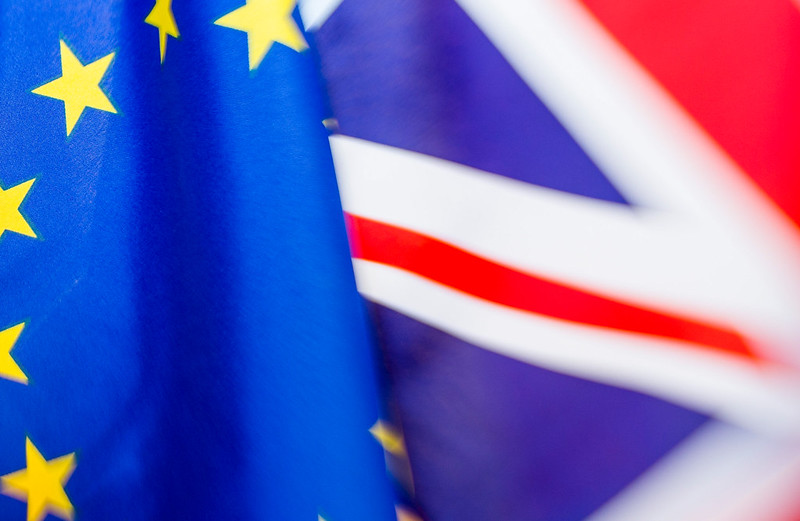
In June 2016, UK held a referendum on the membership of EU and 52% of the respondents voted for leave. Two main schools of thought in constructivism, transactionalism and social constructivism, can help explain Brexit.

Transactionalism dictates that ‘inter-state and inter-society transactions’[1] will lead to the creation of a community in which the use of force will be unthinkable. Frequent and high quality cooperation will foster values of trust and cooperation, leading to the homogenisation of values and norms and emergence of a ‘collective identity’[2]. The EU is a prime example of this – where the states can use different agencies within the EU, as well as the Eurozone and free movement of people, to foster links and cooperate on different issues ranging from human rights to economy. Increased cooperation and interaction will also help foster an European identity. Transactionalists will therefore argue that enhanced cooperation will prevent the use of force and instead resolve issues within the EU through the use of EFTA and CJEU.

Social constructivists argue that social actors base their actions not only on ideal outcomes but also on shared social norms.[3] International organisations are seen to not only ‘reflect the values and norms that they are founded on’[4], but also ‘influence the members states that are participating’[5]. Indeed, constructivists believe that states act due to the logic of appropriateness and legitimacy in accordance to the norms within society – this is provided by the international organisations. International organisations will therefore be used to promote these values within the international sphere. An example of this will be European Instrument for Democracy and Human Rights which provides funding to organisations which promote human rights and democracy in non-EU countries.

These approaches can help explain why Brexit occurred. Firstly, the European identity never manifested in UK. A survey by Clarke also showed that only 3.5% of respondents identified themselves as European.[6] This meant that the social constructivists’ hope of the emergence of a collective identity never materialised. It can thus be argued that this then led to a change in the perception of the “other” identity when issues regarding the EU – such as influx of immigrants and refugees – emerged. British citizens opted to prioritise their British identity and chose to discard their European identity.

Secondly, the shared norms and values never took root in Britain. This can be seen in the idea of sovereignty. UK operates on parliamentary sovereignty – where ‘there are no higher constitutional laws than parliamentary laws’[7] – whereas other member states operate on legal constitution – where countries are limited by constitution or international conventions. Therefore, the Brexit campaign was orientated on taking back control from Brussels and regaining UK’s sovereignty whereas other countries may be more comfortable with the shared/pooled sovereignty brought by the memberships of the EU. Another example on the incompatibility of the parliamentary sovereignty and legal constitutionalism is the reluctance of the UK to adopt the European Charter of fundamental rights. This is seen in two cases – since the adoption of the charter since 2009 by member states, UK attempted to secure, along with Poland, an opt out of the charter (Protocol 30). [8] The Charter will also not be incorporated into UK law as retained EU law after Brexit. [9] The problem of sovereignty existed throughout UK’s membership – one of the reasons why they opted out of the eurozone – but recent issues such as refugees and euro debt crisis may have brought it to the fore and made it one of the key issues that the leave campaign used. In short, EU norms and values were not successful in influencing the UK.

In essence, constructivism, especially the ideas of transactionalism and social constructivists can help explain why Brexit occurred. The EU identity which transactionalists argue will foster in the UK through continued interaction never emerged. The clash of the ideas and norms of the EU and the UK, the example here being sovereignty, was evident throughout the union and exposed due to recent events, leading to Brexit.


[1] Rittberger, V. 2011 p.26

[2] Ibid. p.27

[3] Ibid. p.28

[4] Ibid. p.29

[5] Ibid. p.29

[6] Clarke, H. 2017.

[7] Wind, M. 2017, p.12

[8] Bogdanor, V. 2016, p.14

[8] Ibid. p.18

Bibliography

Bogdanor, V. 2016. Europe and the Sovereignty of the People.

Clarke, H, Goodwin, M, Whiteley, P. 2017. Why Britain voted for Brexit: An individual level analysis of the 2016 referendum vote.

Rittberger, V. 2011. Theories of international organisations.

Wind, M. 2017. Why the British conception of sovereignty was the main reason for Brexit – and why the British ‘leave-vote’ may end up saving rather than undermining the EU.

Trump’s withdrawal from The Paris Agreement and Operational Code Analysis

Image Source (Iga Gozdowska)

Written by James Lo

Trump withdrew from the Paris agreement on the 1st June 2017. The Paris agreement’s aim is for countries to work together to keep global temperature rise this century below 1.5 degrees. In his announcement, Trump argued that the reason for withdrawal was that the agreement led to ‘US disadvantages’[1] as well as ‘exclusive benefits of other countries’[2]. Trump’s personality traits are the best explanation for the withdrawal from the Paris agreement. Trump’s decision to withdraw from the Paris agreement can be explained through individual level analysis, including personal beliefs and operational code analysis.

Personal beliefs can translate onto their foreign policies. Trump openly stated that he didn’t believe in climate change – ‘the concept of global warming was created by and for the Chinese in order to make US manufacturing non-competitive’[1]. Personal beliefs are translated into policy making as US climate change policies are ‘heavily reliant on the tools of the administrative presidency’[2]. Trump’s beliefs therefore dictate the direction of US climate change policies. Another example of his beliefs being the backbone of his policies is in immigration – in 2015 he indicated that he believes Mexico was bringing ‘drugs, crime and rapists to US’[3] – which then translated into his policy to build a wall between US and Mexico.

The operational code theory analysed Trump’s inherent belief of self and others and how it will affect his decision making. Trump’s score on perception of others was 3 standard deviations lower (i.e. others are more hostile) than the mean of past US presidents, while his score on distrust was 4 standard deviations higher than the mean of past US presidents[4]. Therefore, Walker classified Trump as ‘more conflict orientated, mistrustful’[5] and more likely to perceive others as hostile. US’ withdrawal from the Paris agreement can therefore be framed through the idea of mistrust as Trump argued that India and China are using the Paris agreement to undermine the US.[6] Moreover, by mapping this onto a game, Walker argued that if the other had the first move to construct the initial state, Trump will likely choose conflict and alter the initial state.[7] This is important in the analysis of withdrawal as the initial state of the Paris agreement, when Trump elected as President, was that of ratification by Obama’s administration. Trump’s withdrawal can therefore be seen as conflict orientated as he reversed the ratification. In general, Trump’s higher than average traits of distrust and belief in his ability to control events led to the conclusion that Trump ‘prefers the general role of rival as the strategic orientation of the US in world politics’[8]. Indeed, US will become the only UNFCCC country which is not a signatory to the Paris agreement (Syria and Nicaragua did not sign, but they ratified the agreement).[9] Therefore, Trump’s higher than average trait of mistrust and affinity for conflict motivated him to withdraw from the Paris agreement.

Trump’s personality is especially crucial when analysing American environmental policy because it has always been ‘heavily reliant on tools of administrative presidency’ [10]. This meant that the American president had the final say in terms of environmental policy. Indeed, even though both the House and Senate were against the Clean Power Plan, Obama was able to veto their resolution of disapproval. This means that the direction of America’s environmental policy is largely dictated by the wishes of the president. As discussed above, the operational code analysis and Trump’s personal preferences dictated Trump’s foreign policy behaviour, leading to US’ withdrawal from the Paris Agreement.


All in all, operational code analysis can help explain Trump’s withdrawal as the preference of the general role of rival enticed Trump to act on his personal beliefs regarding climate change both domestically and internationally. The withdrawal from the Paris agreement was an expression of his personality matrix to alter the initial state of the international agreement. Even if one held the same personal belief regarding climate change as Trump, the preference of cooperation instead of rivalry can allow US to remain in the Paris agreement.


[1] Trump, D. 2012.

[2] Konisky, D. 2018, p.356

[3] Trump, D. 2015.

[4] Walker, S., Schafer, M., & Smith, G. 2018, p.12

[5] Ibid. p.15

[6] Trump, D. 2017.

[7] Walker, S. et al. 2018, p.17

[8] Ibid. p.20

[9] UNFCCC. 2019.

[10] Konisky, D. 2018, p.356

Bibliography

Konisky, M. & Woods, 2018. N. Environmental Federalism and the Trump Presidency: A Preliminary Assessment

Trump, D. Speeches. 2012, 2015, 2017.

Walker, S., Schafer, M., & Smith, G. 2018. The operational codes of Donald Trump and Hilary Clinton.